SWaP-C PRECISION TIMING Ultra-Low Power Oscillators (<60 mW) & Atomic Standards
North Andover, MA USA Tel: +1 (781) 521-5862 info@timecubic.com
TimeCubic Inc.
Precision Timing & Frequency Standards

Ultra-Low Power Frequency & Timing Solutions

Dedicated to engineering ultra-low power oscillators (<60 mW), disciplined timing modules, and atomic standards for mission-critical SWaP-C applications across subsea OBN, aerospace, and smart grids.

Over 30 Years of Frequency & Timing Heritage

TimeCubic Inc. engineers industry-leading ultra-low power oscillators, 1PPS disciplined timing modules, and atomic standards. Founded by seasoned physicists and RF timing experts, our proprietary thermal architecture, precision ovenization, and advanced digital signal processing solve the critical trade-off between power consumption and holdover accuracy.

Our Mission on SWaP-C

Every product we develop is guided by the SWaP-C paradigm: Size, Weight, Power, and Cost. In modern applications—such as seabed ocean bottom nodes that operate unassisted for months thousands of meters below sea level—power efficiency directly translates to operational viability and mission success.

POWER CONSUMPTION <60 mW
PHASE RESOLUTION ≤1 ns
FREQ ACCURACY <10-12
R&D HERITAGE 30+ Years
Featured Hardware Module IN PRODUCTION
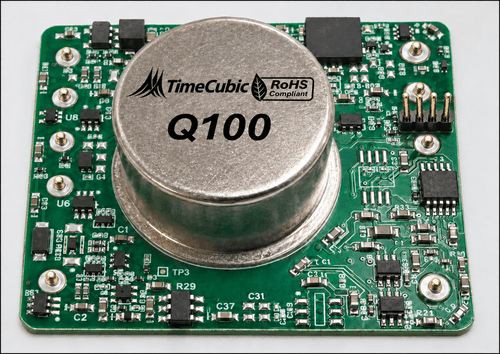
TimeCubic Model Q100

Model Q100 / Q101

<60 mW • 10 MHz

Ultra-low power 1PPS disciplined oscillator module with sub-nanosecond phase measurement and RS232 time-of-day telemetry.

TimeCubic Proprietary Low-Power Architecture & IP
Precision Product Catalog

Engineered for Harsh SWaP-C Environments

From deep subsea ocean bottom nodes to aerospace payloads, our modular oscillators deliver unmatched battery endurance and holdover precision.

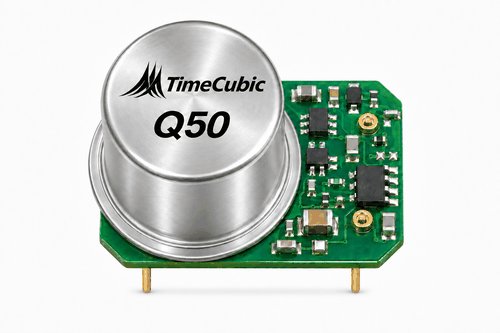
Model Q50
MODEL Q50 / Q52 <60 mW

Ultra-Low Power Oscillator

Designed for seabed seismic nodes (OBN) and battery systems. Low phase noise, optional aging grade, HCMOS output up to 100 MHz.

Model Q100
MODEL Q100 <60 mW • 1PPS

1PPS Disciplined Oscillator

Disciplined to 1 ns RMS phase and <10-12 in frequency. Continuous 1-second phase reporting and RS232 time-of-day interface.

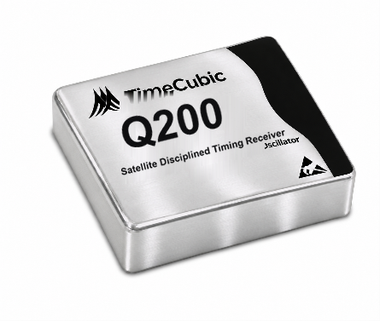
Model Q200
MODEL Q200 10 MHz • Multi-Output

Satellite Disciplined Timing Receiver

High-stability 1PPS GPS/satellite synchronization timing receiver with RS232 telemetry, ultra-low phase noise, and multiple frequency outputs (10 MHz reference, 5 MHz, 8.192 MHz).

Application & Blog • Technical Whitepapers

Engineering Insights & Application Case Studies

Peer-reviewed technical briefs, mathematical models, and real-world deployment trade studies written by TimeCubic timing physicists and field application architects.

4 Peer-Reviewed Briefs
Custom Engineering • OBS Case Study 12-Month Target • <50 mW

Custom 35°C Low-Temperature SC-Cut Oven: Breaking the 50 mW Barrier for Deepwater OBS

How TimeCubic customized the crystallographic turnover of an ultra-low-aging SC-cut quartz resonator to a low 35°C setpoint, reducing seabed thermal gradient by 58% and enabling <1 ms holdover across 6 to 12+ month Ocean Bottom Seismometer missions.

~28–32 mW Typical SC-Cut 35°C Turnover <1 ms @ 6 Months
Application: Deep-Sea OBS Read Case Study →
Marine Geophysics • OBN Brief #01 • 8 min read

The Physics of Seabed Clock Drift: Why <60 mW Disciplined Oscillators Are Reshaping OBN Economics

An engineering deep dive into blind holdover at 3,000 meters depth, seismic two-way travel time (TWT) migration error (Δx = v • Δt), cold battery derating, and why <60 mW Q100 slashes lithium battery mass by 70% compared to CSAC ($120–140 mW) and conventional OCXOs.

<60 mW Steady-State ≤1 ns RMS Phase Discipline <±1 ms @ 60 Days
Model: Q100 Disciplined Read Full Paper →
Tactical Avionics • UAV Brief #02 • 9 min read

G-Sensitivity in Tactical GPSDOs: Mitigating Vibration-Induced Phase Noise in High-Dynamics Payloads

How low acceleration sensitivity (Γ < 0.5 ppb/g) in TimeCubic's Q52 oscillator core and Q101 GPSDO eliminates phase noise skirts under MIL-STD-810H random vibration, survives 500g launch shocks, and maintains <125 mW across -40°C to +85°C.

Γ < 0.5 ppb/g 500g Launch Shock (MIL-STD-202) <125 mW Power
Models: Q52 / Q101 GPSDO Read Full Paper →
RF • Direct Sampling • SDR Brief #03 • 8 min read

Phase Noise and Aperture Jitter in Direct-RF Sampling: Why Master Clocks Determine ADC SNR & EVM

A quantitative hardware analysis of clock phase noise propagation through multi-gigasample direct-RF converters. Explaining the SNR ceiling formula, ENOB preservation (>8.8 bits at 4 GHz), and eliminating reciprocal mixing skirts with Q50's -155 dBc/Hz floor at <60 mW.

-155 dBc/Hz Floor <75 fs Jitter Integration >8.8 Bits @ 4 GHz
Model: Q50 Low Phase Noise Read Full Paper →
Smart Grid • Substation Sync Brief #04 • 9 min read

GNSS Jamming & Spoofing Resilience in Smart Grid PMUs: Adaptive DSP Holdover vs. Static Aging Drift

How IEEE C37.118 Total Vector Error (TVE < 1%) bounds substation timing limits to ±26.5 μs, and how TimeCubic's Model Q200 adaptive DSP learning loop and Kalman innovation anti-spoofing heuristics maintain 24-to-72 hour compliant holdover during satellite blackouts.

IEEE C37.118 TVE < 1% Anti-Spoofing Heuristics ±1.5 μs / 24h Holdover
Model: Q200 Adaptive DSP Read Full Paper →
Core Engineering IP

Proprietary Thermal Design & Precision Algorithms

TimeCubic was founded in 2017 by an accomplished team of physicists and electronic engineers with over 30 years in frequency control. We hold proprietary patents and design secrets addressing the fundamental trade-off between power consumption and thermal stability.

✓
Patented Micro-Oven Thermal Isolation

Achieves TCXO/OCXO-grade temperature stability while consuming only 10% to 20% of typical ovenized oscillator power.

✓
Sub-Nanosecond Real-Time Telemetry

Continuous 1-second phase measurement reports drift in real-time over standard RS232, enabling predictive drift compensation.

✓
Deep Seabed & Space Hardened Reliability

Qualified for continuous 60-day to 120-day ocean bottom deployment up to 6,000 meters depth under isothermal conditions.

TimeCubic Product Overview Chart
Official TimeCubic Product Architecture & Selection Overview

Need Custom Frequency or Custom Pinout Specifications?

TimeCubic specializes in custom engineered timing solutions for defense, subsea, and telecom systems. Contact our application engineering team in North Andover, MA for custom test data and evaluation units.

NORTH ANDOVER, MASSACHUSETTS R&D FACILITY

Custom High-Precision OCXO Solutions with Direct Local Engineering

Need a non-standard frequency, drop-in footprint replacement for an obsolete component, or tailored low-G vibration hardening? TimeCubic’s senior timing architects in Massachusetts work directly with your hardware engineering team from design review to production ramp.

✓ Custom Frequencies

5 MHz to 100 MHz custom cuts (10M, 16.384M, 25M, 100M standard, any custom intermediate frequency).

✓ Drop-In Pinout Retrofits

Custom pin layouts, voltage rails (3.3V / 5.0V), and packaging to replace discontinued competitor oscillators.

✓ Low-G Acceleration Tuning

Targeted crystal orientation delivering native <0.3 ppb/g to 0.1 ppb/g sensitivity for UAV and defense payloads.

✓ Rapid US Prototyping

On-site thermal chambers, phase noise analyzers, and direct FAE interaction with zero overseas timezone latency.

Domestic Engineering Advantages

  • • Local Technical Collaboration: Real-time hardware review with Massachusetts physicists and RF engineers.
  • • Pre-Deployment Blank Aging: Specialized pre-aging cycles tailored to your mission holdover requirements.
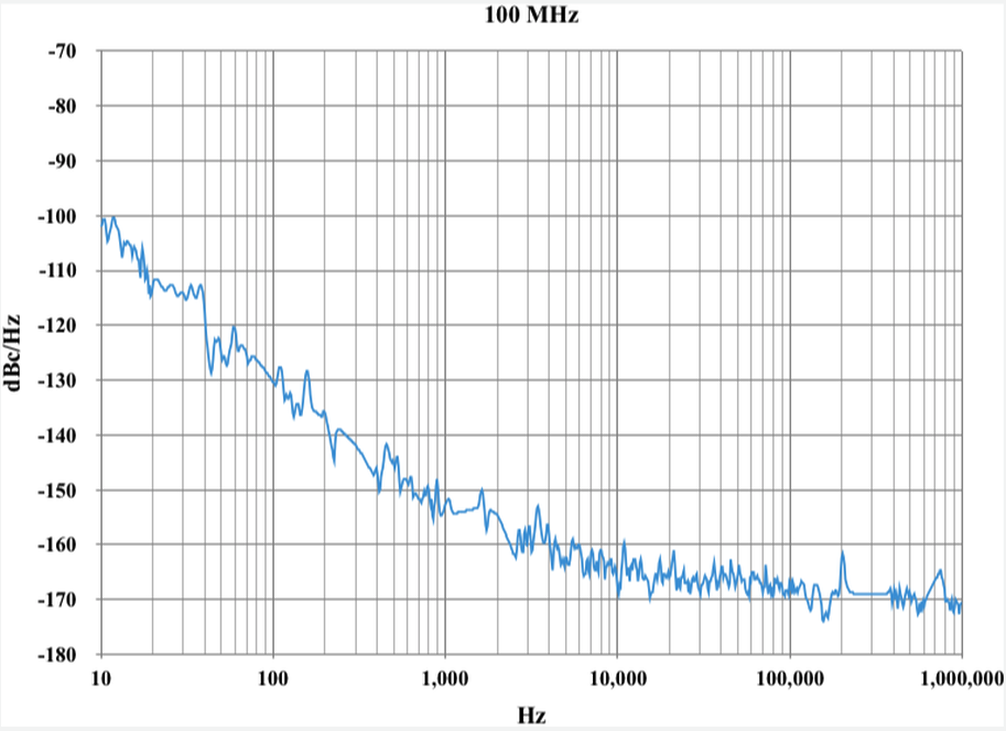
  • • Full Phase Noise Characterization: Laboratory test reports down to -175 dBc/Hz floor supplied with evaluation units.
  • • SWaP-C Optimization: Squeezing OCXO holdover into ultra-compact battery budgets (<60 mW).
Frequently Asked Questions

Precision Timing Engineering FAQ

Technical answers regarding ultra-low power consumption, phase noise ceilings, G-sensitivity, and custom oscillator engineering.

How does TimeCubic achieve <60 mW power consumption in an OCXO? ↓
Standard commercial OCXOs consume 1.5 to 3.5 Watts to maintain internal oven temperatures, making multi-month battery operation impossible. TimeCubic uses patented thermodynamic micro-isolation chambers that minimize thermal loss and reduce the required heated volume. As a result, Models Q50 and Q100 draw only 55 mW to 65 mW steady-state power while delivering true oven-controlled frequency stability (±10 ppb) and subsea holdover (±1.0 ms over 60+ days).
Can TimeCubic provide custom frequencies, supply voltages, and drop-in pinouts? ↓
Yes. Our R&D engineering lab in North Andover, Massachusetts specializes in tailored OEM timing solutions. We deliver custom frequency cuts between 5 MHz and 100 MHz (e.g. 10 MHz, 16.384 MHz, 25 MHz, 100 MHz), supply voltages of +3.3V or +5.0V DC, and mechanical/pinout adaptations designed to serve as pin-compatible drop-in replacements for obsolete or hard-to-source oscillators from legacy manufacturers.
What phase noise floor is available for high-speed direct-RF ADC sampling? ↓
TimeCubic Model Q40L and Model Q69-100M feature an ultra-low phase noise floor of -175 dBc/Hz at 1 MHz offset from a 100 MHz carrier, with total integrated aperture jitter measured below 100 femtoseconds. This prevents reciprocal mixing in wideband radar receivers and ensures modern direct-RF ADCs and DACs reach their theoretical Signal-to-Noise Ratio (SNR) ceilings.
How does TimeCubic mitigate vibration-induced phase noise (low G-sensitivity)? ↓
In tactical UAVs, defense missiles, and launch vehicles, mechanical vibration modulates the crystal blank and creates harmful sideband phase noise spurs. TimeCubic Model Q52L and Model Q69 achieve low-G acceleration sensitivity ratings of <0.3 ppb/g down to 0.1 ppb/g using stress-compensated crystal orientations and multi-axis rigid internal mounting, surviving up to 1000g launch shocks.
Where is TimeCubic located and what are the advantages of local US engineering? ↓
TimeCubic is located at 800 Turnpike Street, Suite 300, North Andover, Massachusetts, USA. Direct collaboration with our Massachusetts engineering lab provides rapid prototype turnaround, on-site environmental test chamber characterization, domestic supply chain assurance, and zero timezone lag when consulting with senior timing architects.
How does TimeCubic low-G OCXO compare to SiTime MEMS oscillators for mobile systems? ↓
While SiTime MEMS oscillators provide good shock survivability and low acceleration sensitivity (0.1 to 0.5 ppb/g), MEMS suffers from significant limitations: high broadband phase noise floor (-145 to -155 dBc/Hz), elevated close-in 1/f flicker noise, and discrete PLL spurs from fractional-N clock synthesis. TimeCubic Models Q52 and Q101 match SiTime's acceleration sensitivity (0.1 ppb/g flight-grade) while delivering the pristine phase noise of SC-cut quartz (-175 dBc/Hz floor, -135 dBc/Hz at 100 Hz offset), 100x lower short-term jitter, zero synthesizer spurs, and autonomous microsecond holdover—all at <60 mW operating power.
Can TimeCubic achieve 1.5 μs holdover over 12 hours and 24 hours during GNSS outages? ↓
Yes. TimeCubic Model Q200 delivers guaranteed autonomous holdover: under stable temperatures, accumulated time error is <0.8 μs over 12 hours and <1.0 μs over 24 hours. Even when ambient temperatures cycle across ±5°C/hr, its internal adaptive DSP Kalman filter bounds cumulative time error to <1.2 μs at 12 hours and ≤1.5 μs at 24 hours, meeting stringent IEEE C37.118 and ITU-T G.8273.1 Class C requirements.